
While it can be easy to dismiss motorcycle laws as intrusions into the joy of riding motorcycles, Colorado’s motorcycle laws are based on creating safe riding conditions for the motorcyclist and the other drivers around them. Here’s what you need to know.
What Are Colorado’s Motorcycle Laws, and What Do They Do to Protect Riders?
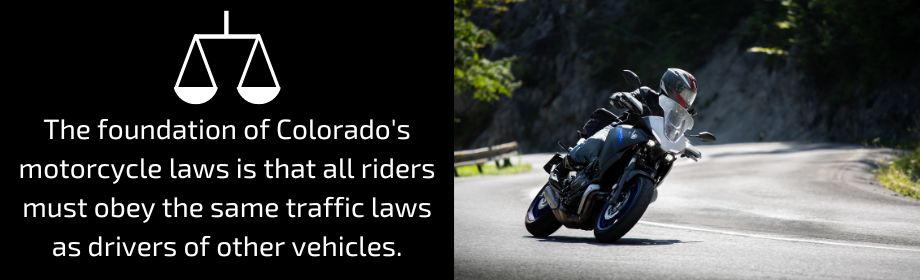
The foundation of Colorado’s motorcycle laws is that all riders must obey the same traffic laws as drivers of other vehicles. That means obeying speed limits, traffic signs and signals, and not riding while under the influence of drugs and alcohol. (Note that this doesn’t mean just illegal drugs–some prescription and over-the-counter drugs can cause drowsiness or disorientation that can make it unsafe to ride, even though they’re legal.)
The laws that are specific to motorcycles include the following.
- Helmets are not required for riders 18 and older, but they are required for anyone under 18. Minors must wear DOT-approved helmets. Because head injuries and fatalities are a much greater risk for those not wearing helmets, it’s recommended that everyone wear them, but minors must have that protection.
- Eye protection is required for all riders, regardless of age. A windshield does not qualify as eye protection. The best protection comes from a visor on a helmet, but goggles or glasses made from safety glass or plastic are acceptable. A small piece of debris that lands in the eye can cause permanent damage, which is why this is required.
- Motorcycles are not allowed to engage in lane-splitting, lane-sharing with cars, or passing other vehicles in the same lane. These are practices that frequently lead to accidents with devastating consequences. However, motorcycles can share a lane with another motorcycle as long as there are no more than two motorcycles riding side by side.
- Motorcyclists are not allowed to grab onto another motorcycle or vehicle for the purpose of being towed (also known as clinging). If the front vehicle has to swerve or stop suddenly, the cyclist can be subject to horrendous injuries.
- When a motorcyclist has a passenger, there must be footrests for the passenger, and the passenger must use them. This stabilizes the passenger and prevents their feet from dragging on the ground, which can injure the feet and cause the motorcycle to be more unstable. Passengers must also ride behind the driver, not in front, which would cause the driver to have less control of the cycle.
What Are Colorado’s Comparative Negligence Laws?
Across the U.S., three types of comparative negligence laws come into play when there’s a personal injury case, all of which look at the possible liability of the person injured in the accident.
- Contributory negligence. This is the most severe type of negligence law and is only used in a few states. It says that if the injured person has even the slightest amount of fault in the accident, they’re not eligible to receive any damages.
- Pure comparative negligence. This is basically the opposite of contributory negligence. It finds that the injured person can be 99% at fault for the accident and still receive 1% of the damages. What that means is that if the injured person was awarded damages of $10,000 but was found to be 70% at fault for the accident, the damages would be reduced by 70%, and they’d receive $3,000.
- Modified comparative negligence. Depending on the state, this says that the injured person cannot be either 50% or 51% at fault for the accident and still receive damages.
Colorado uses modified comparative negligence with the 50% threshold. If the injured person is 49% responsible for the accident, they can still receive damages–but not if they’re 50% responsible.
The modified comparative negligence laws mean that there will be a strong effort to push as much liability as possible onto the injured party so that the other party doesn’t have to pay out anything. That’s one reason following Colorado’s motorcycle laws is a good practice. It’s also why working with an experienced personal injury attorney is highly recommended.
What Should I Do if I Was Injured While Riding My Motorcycle?
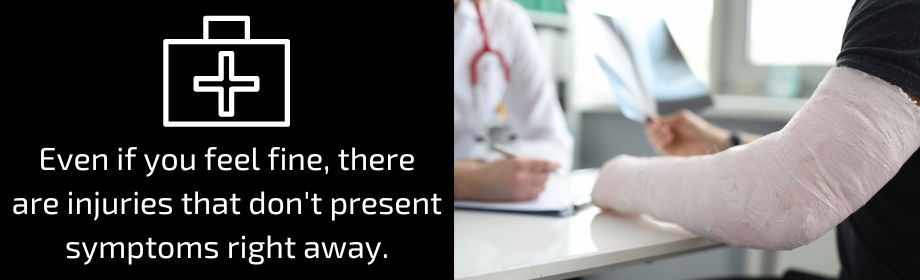
First, have yourself checked out by a doctor. Even if you feel fine, there are injuries that don’t present symptoms right away. Some of those injuries can be serious and become life-threatening if untreated. It’s also good to exchange contact and insurance information with other drivers involved in the accident–but don’t have any other conversation with them (see below for why that’s recommended).
Then call Genco Injury Attorneys at 303-500-1376 for a free case evaluation. Because personal injury cases, including motorcycle accidents, have complex modified comparative negligence laws affecting the outcomes, it’s best to have an experienced, knowledgeable personal injury attorney working to represent your best interests.
Something you shouldn’t do: Have any communication with the other drivers involved, their insurance representatives, or their lawyers. If you were injured, their goal is to make sure you meet the 51% threshold so they don’t have to pay out anything.
If you receive any communication from the bus company’s insurance representative or attorney, don’t talk or write to them. Their goal is to have the bus’s side pay out little or nothing. To that end, they may try to get you to say something that could be interpreted as taking at least 50% of the blame for the accident. They could also pressure you to accept a much lower settlement than you might be eligible for. Send all communications to your attorney.